

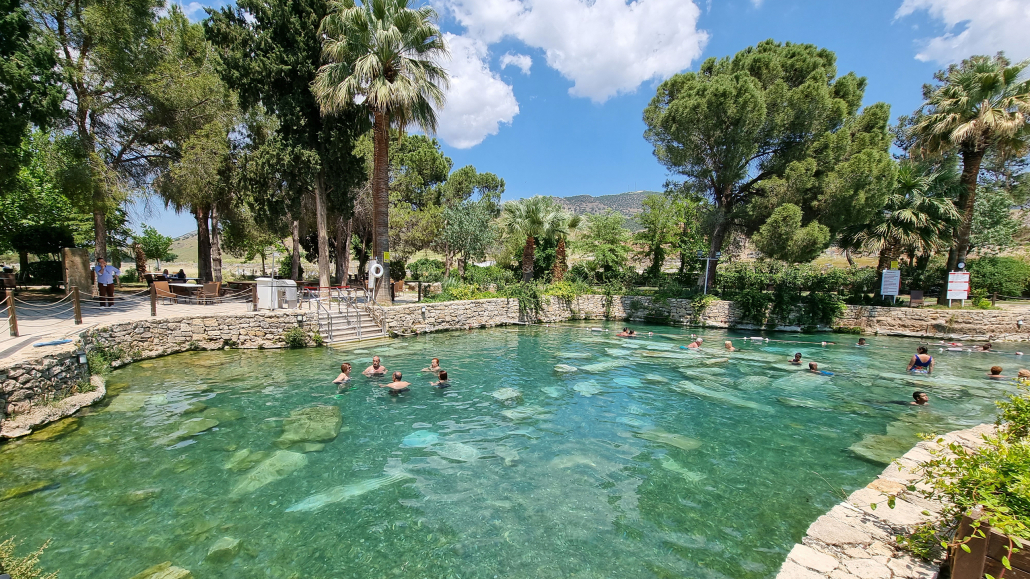
Cleopatra Pool, also known as the Antique Pool of Hierapolis, is one of the most unique swimming experiences in the world. Located within the ancient city of Hierapolis above the famous Pamukkale Travertines, this thermal pool allows visitors to swim among submerged Roman columns and ancient ruins while enjoying naturally warm mineral water.
The pool formed after an earthquake in ancient times caused parts of nearby Roman structures to collapse into a thermal spring. Rather than removing the ruins, the site became a remarkable historical bathing pool where visitors today can swim among marble columns that are over 2,000 years old.
Fed by Pamukkale’s geothermal waters, Cleopatra Pool maintains a pleasant temperature year-round, typically around 36°C (97°F). The mineral-rich water contains calcium, magnesium, and other natural elements long associated with relaxation and therapeutic benefits.
Today, Cleopatra Pool is one of the most memorable experiences within the Pamukkale–Hierapolis complex, combining ancient history, thermal bathing, and an extraordinary setting surrounded by archaeological remains.
Why Cleopatra Pool Is Special
Cleopatra Pool stands out among thermal springs for its unique blend of natural geothermal water and ancient ruins.
Swim Among Ancient Columns
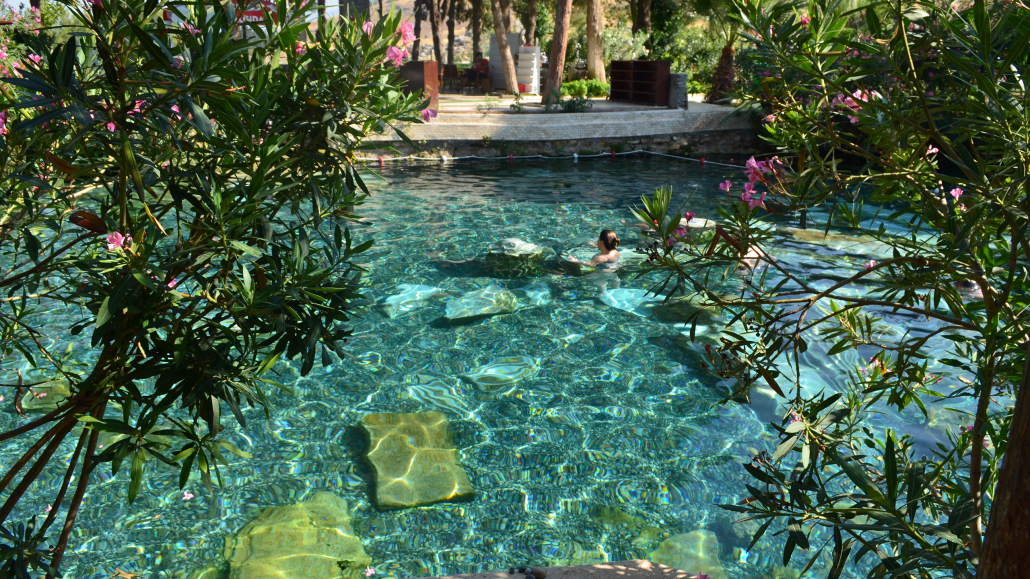
The most distinctive feature of the pool is the presence of fallen Roman columns and marble fragments resting on the bottom of the spring. These remains are believed to have collapsed during an ancient earthquake.
Visitors can swim around the columns, creating the feeling of floating through a submerged archaeological site.
Natural Thermal Water
The pool is fed by Pamukkale’s geothermal springs. The water remains warm throughout the year, making it comfortable for swimming even during cooler months.
Historic Spa Tradition
Hierapolis was known in antiquity as a healing centre where people travelled to benefit from mineral-rich thermal waters. Cleopatra Pool continues that long tradition of therapeutic bathing.
Beautiful Natural Setting
The pool is surrounded by palm trees, ancient ruins, and views of the Pamukkale terraces, creating a relaxing, scenic atmosphere.
The Legend of Cleopatra
The name “Cleopatra Pool” comes from a local legend suggesting that Queen Cleopatra herself once swam in these waters during a visit to the region.
While historians debate whether Cleopatra actually visited Hierapolis, the story has become an enduring part of the site’s identity. The legend reflects the long-standing reputation of the area’s thermal waters as luxurious and restorative.
Regardless of the story’s historical accuracy, the name adds a sense of romance and intrigue to the experience of swimming in this ancient pool.
What to Expect When Visiting
Cleopatra Pool is located within the Hierapolis archaeological site and requires an additional entrance fee in addition to the general Pamukkale admission ticket.
Visitors can access changing facilities and lockers before entering the pool area.
Inside the pool, the experience is both relaxing and visually fascinating. The warm water is clear enough to see the marble columns resting beneath the surface, and gentle bubbles rise from the geothermal spring below.
Many visitors choose to float quietly while observing the ancient ruins beneath them.
How Long to Spend at Cleopatra Pool
Most visitors spend 30 to 60 minutes enjoying the pool.
This allows enough time to:
- Relax in the warm mineral water
- Swim around the submerged columns
- Take photographs
- Enjoy the surrounding atmosphere
The pool area also includes a small café and seating areas where visitors can rest after swimming.
Health and Wellness Benefits
Pamukkale’s thermal waters have been valued for their mineral content and potential health benefits for centuries.
The water in Cleopatra Pool contains:
- Calcium
- Magnesium
- Bicarbonate minerals
These elements are traditionally believed to support relaxation and improve circulation. While modern medical evidence varies, many visitors report feeling refreshed after bathing in the thermal waters.
How to Visit Cleopatra Pool
Cleopatra Pool is located inside the Hierapolis archaeological site, directly above the Pamukkale Travertines.
Nearest Airport
The closest airport is:
Denizli Çardak Airport (DNZ) — approximately 70 km from Pamukkale.
Getting to Pamukkale
Visitors can reach the site from:
- Denizli city centre (20 km)
- Selçuk / Ephesus
- Antalya
- Fethiye
- Cappadocia
Transportation options include buses, guided tours, rental cars, and shuttle transfers.
Once inside the Pamukkale entrance gates, signs clearly direct visitors toward the pool area.
Best Time to Visit Cleopatra Pool
Early Morning
The pool is typically quieter in the morning before large tour groups arrive.
Spring and Autumn
These seasons offer comfortable weather and fewer crowds.
Summer
Summer can be busy, but the warm water and surrounding shade still make the experience enjoyable.
Winter
Winter visits are peaceful, and the warm water contrasts beautifully with the cooler air.
Insider Tips for Visiting
A few practical tips can help you enjoy Cleopatra Pool more fully.
Bring Swimwear
Swimming is only allowed with proper swimwear, so come prepared.
Arrive Early
The pool can become crowded during peak travel hours.
Use Lockers
Lockers are available for storing personal belongings.
Protect Your Camera
Waterproof phone cases can be helpful if you want to take photos while in the pool.
Cleopatra Pool from Above
While swimming in Cleopatra Pool provides an intimate connection with ancient history, the broader landscape of Pamukkale becomes even more impressive when viewed from above.
From the air, visitors can see the entire Hierapolis archaeological complex, the white travertine terraces cascading down the hillside, and the thermal pools that have attracted travellers for thousands of years.
At sunrise, the landscape is bathed in soft golden light, revealing the striking contrast between the bright white terraces and the surrounding valley.
Many travellers choose to experience this aerial perspective on a Pamukkale sunrise hot-air balloon flight, where the full scale of the travertines and ancient city can be appreciated from the sky.
Frequently Asked Questions
Is Cleopatra Pool worth visiting?
Yes. Cleopatra Pool offers a rare opportunity to swim in warm thermal water surrounded by ancient Roman ruins.
Do you need to pay extra to enter Cleopatra Pool?
Yes. Entrance to Cleopatra Pool requires an additional fee separate from the main Pamukkale ticket.
How warm is Cleopatra Pool?
The water temperature remains around 36°C (97°F) year-round.
Can children swim in Cleopatra Pool?
Yes, children are allowed to swim in the pool with supervision.
How long should you stay at Cleopatra Pool?
Most visitors spend 30 to 60 minutes enjoying the thermal water.