

Hierapolis Ancient City stands directly above the famous Pamukkale Travertines and forms part of the UNESCO World Heritage Site of Hierapolis–Pamukkale. Founded during the Hellenistic period and later developed extensively by the Romans, Hierapolis became one of the most important thermal spa cities of the ancient world.
The city was built around the natural hot springs that flow through Pamukkale. For more than two thousand years, travellers, pilgrims, and patients visited Hierapolis seeking the healing properties of its mineral-rich waters. Today, the site remains one of the best-preserved ancient cities in Turkey and offers visitors the rare opportunity to explore Roman ruins set within a dramatic natural landscape.
Walking through Hierapolis reveals monumental structures, grand streets, temples, baths, and one of Anatolia’s most impressive Roman theatres. Combined with the white travertine terraces below, the city provides a fascinating glimpse into how ancient civilisations interacted with natural wonders.
History of Hierapolis
Hierapolis was founded around the 2nd century BC by the Attalid kings of Pergamon. The name “Hierapolis” translates to “Sacred City“, reflecting its religious significance and the presence of numerous temples and sacred structures.
During the Roman period, the city flourished as a major thermal spa destination. Wealthy Romans travelled here to bathe in the mineral waters believed to cure various illnesses. Large bath complexes, healing centres, and public buildings were constructed to accommodate visitors.
In 60 AD, a powerful earthquake destroyed much of the city. It was rebuilt under Roman Emperor Nero, and many of the impressive structures seen today date from this reconstruction period.
By the 4th century, Hierapolis had become an important Christian centre. It is believed to be the place where Saint Philip the Apostle was martyred, and a large pilgrimage complex was later built in his honour.
The city remained active during the Byzantine period, then gradually declined and was eventually abandoned in the medieval era.
Major Highlights of Hierapolis
Hierapolis is a vast archaeological site, and several structures stand out as must-see landmarks.
The Roman Theatre
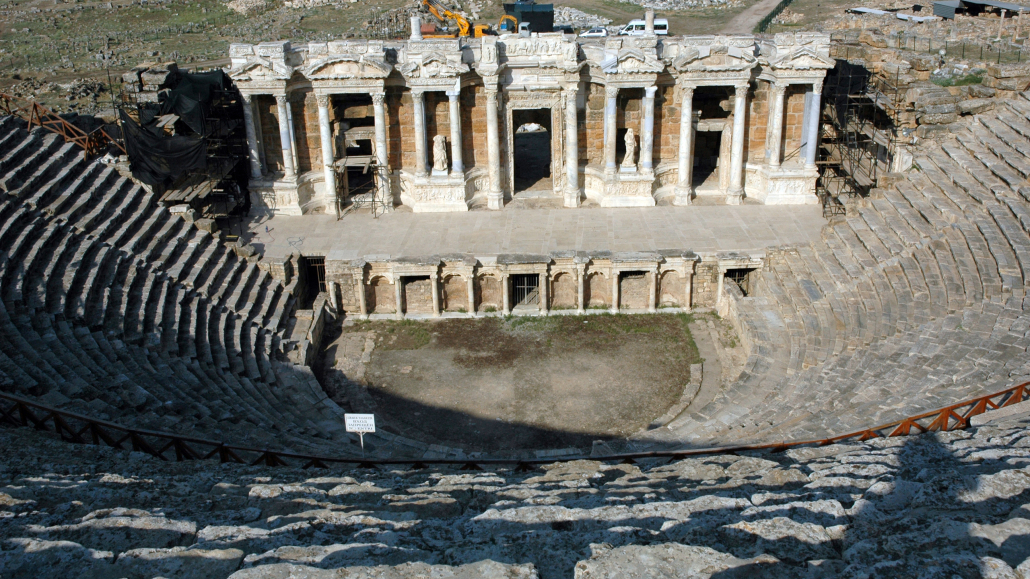
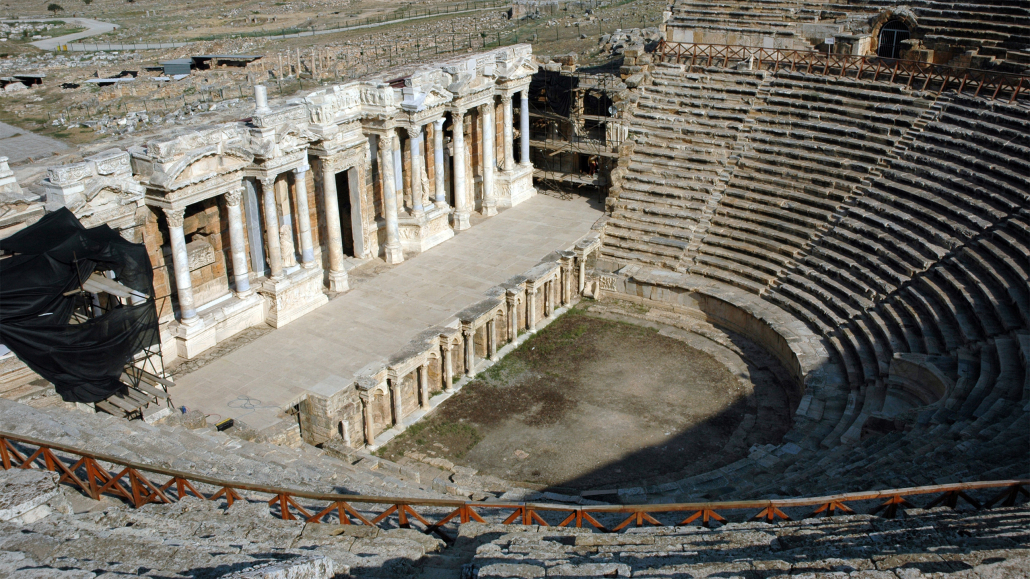
The theatre of Hierapolis is one of the most impressive ancient theatres in Turkey. Built during the 2nd century AD, it could seat approximately 12,000 spectators.
The theatre’s stage building is richly decorated with relief sculptures depicting mythological scenes, gods, and emperors. From the upper rows, visitors enjoy a sweeping view over the Pamukkale valley.


The Necropolis
Hierapolis contains one of the largest ancient cemeteries in Anatolia. The Necropolis stretches over two kilometres and is filled with hundreds of tombs, sarcophagi, and mausoleums.
The variety of burial styles reflects the city’s multicultural population.

The Roman Baths
The ancient bath complex demonstrates the central role of thermal water in Hierapolis. Visitors once moved through a sequence of rooms, including hot baths, warm rooms, and cold pools.
Today, the structure houses the Hierapolis Archaeology Museum, which displays artefacts discovered during excavations.
Frontinus Gate and Main Street


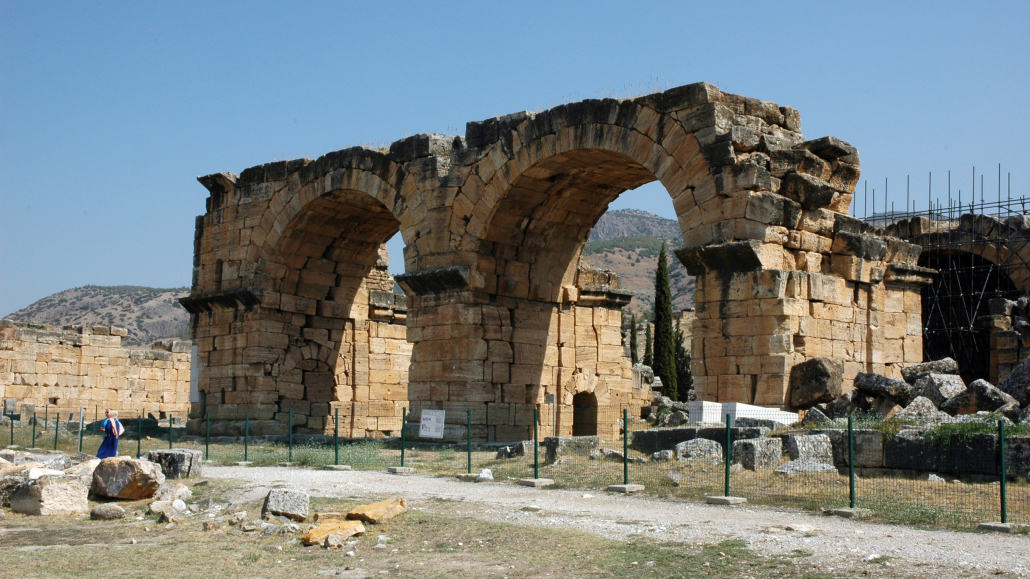
Visitors entering the ancient city often pass through Frontinus Gate, a monumental Roman entrance built in the 1st century AD. Beyond the gate lies the main collonaded street that once served as the city’s commercial and ceremonial centre.
Temple of Apollo
The Temple of Apollo was one of the most sacred sites in Hierapolis. Nearby lies the Plutonium, an ancient cave believed to be an entrance to the underworld. Ancient priests conducted rituals here involving toxic gases that emerged from the cave.


Cleopatra’s Pool
One of the most famous attractions within Hierapolis is Cleopatra’s Pool, also known as the Antique Pool.
This thermal pool contains submerged Roman columns that collapsed during an ancient earthquake. Visitors can swim among these historical remains while enjoying the warm mineral waters.
The water temperature remains around 36°C (97°F) year-round, making it a popular experience for travellers.

Exploring Hierapolis feels like walking through an open-air museum. The site covers a large area, and visitors typically spend two to three hours exploring the ruins.
The layout includes:
- Wide Roman streets
- Monumental gates
- Religious structures
- Bath complexes
- The theatre district
Because the city sits on a hill above Pamukkale, many viewpoints also offer spectacular views of the surrounding valley and travertine terraces.
How to Visit Hierapolis
Hierapolis is located directly above the Pamukkale Travertines, and most visitors explore both sites during the same visit.
Entrance
The archaeological site is accessed through the same entrance used for Pamukkale.
Visitors typically enter from either:
- South Gate
- North Gate
The South Gate provides easier access for those walking up from the travertines.

Getting There
The closest airport is Denizli Çardak Airport, about 70 kilometres from Pamukkale.
Transportation options include:
- Shuttle transfers
- Rental cars
- Organised tours
- Local minibuses from Denizli
Best Time to Visit Hierapolis
Hierapolis can be visited throughout the year, but the experience varies by season.
Spring
Spring offers pleasant temperatures and green landscapes surrounding the ruins.
Summer
Summer is the busiest season, and temperatures can be very hot. Visiting early in the morning is recommended.
Autumn
Autumn provides comfortable weather and excellent lighting for photography.
Winter
Winter is quieter, and the steam rising from the thermal terraces creates a unique atmosphere.
Insider Tips for Visiting
A few practical tips can make your visit more enjoyable.
Wear Comfortable Shoes
The site is large and involves significant walking across uneven ancient stones.
Bring Water
Shade can be limited in parts of the ruins, particularly during summer.
Allow Enough Time
Many visitors underestimate the size of the archaeological site. Plan at least two hours for a proper visit.
Combine with the Travertines
The best experience is to explore the Pamukkale Travertines first, then continue up to Hierapolis.
Hierapolis from Above
While walking through the ruins reveals the history of the ancient city, seeing Hierapolis from above offers a completely different perspective.
From the air, the layout of the city becomes clear — long Roman streets, the grand theatre carved into the hillside, and the white terraces of Pamukkale cascading below.
At sunrise, the soft light illuminates both the ruins and the travertine formations, creating one of the most striking landscapes in Turkey.
Many visitors choose to experience this perspective on a Pamukkale sunrise hot-air balloon flight, which allows them to view the ancient city and the natural terraces together from the sky.
Frequently Asked Questions
What is Hierapolis famous for?
Hierapolis is famous for its well-preserved Roman ruins and its connection to the thermal springs of Pamukkale.
How old is Hierapolis?
The city was founded in the 2nd century BC, making it over 2,000 years old.
Is Hierapolis part of Pamukkale?
Yes. Hierapolis and Pamukkale together form a UNESCO World Heritage Site.
How long does it take to explore Hierapolis?
Most visitors spend two to three hours exploring the archaeological site.
Can you visit Hierapolis without visiting Pamukkale?
Technically, yes, but most travellers visit both together since they are located at the same site.